
Algae & Phosphates: What You Need to Know (and how to fix it)
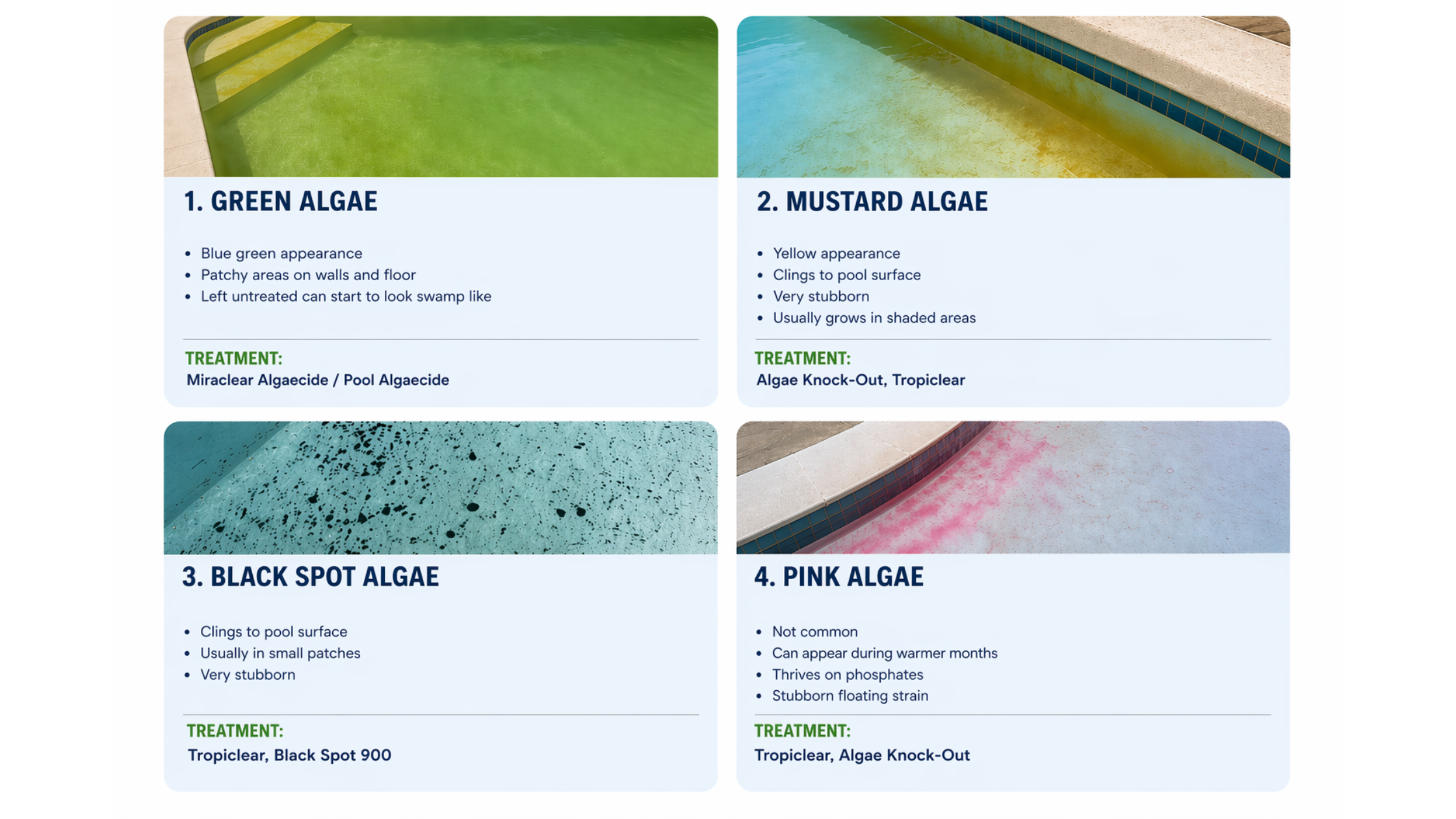
When algae or phosphates show up, it usually means something in the water chemistry has shifted—and if left untreated, it tends to get worse quickly.
At Central West Pool & Spa Shop, we offer free in-store water testing here in Bathurst, so you can bring a sample in anytime. We’ll help identify exactly what’s going on and guide you to the right treatment using the products we have in-store.
Common types of pool algae
Algae comes in different forms, and each behaves slightly differently in your pool.
Green Algae
The most common type.
Turns water green or cloudy
Can appear as slimy surfaces or streaks
Spreads quickly in warm weather or low chlorine conditions
Black Algae (Black Spot)
Small dark spots on walls, steps, or tiles
Often “roots” into surfaces, making it harder to remove
Can harbour bacteria if left untreated
Mustard Algae
Yellow or brown dusty patches
Often appears in shaded or low-circulation areas
Can come back repeatedly if not fully treated
Pink Algae (Pink Slime / bacteria)
Pink or reddish slimy film
Common around skimmers, ladders, and pipework
Often mistaken for algae, but is actually bacteria-based
Why algae is more than just a cosmetic issue
Algae doesn’t just make your pool look bad—it can also affect swimmer comfort and water hygiene.
Potential issues include:
Skin irritation or rashes
Eye and ear irritation
Increased bacteria growth in the water
Slippery surfaces that increase safety risks
Triggering allergies or respiratory discomfort in some swimmers
What causes algae to grow?
Algae spores are always present, but they only take hold when conditions allow, such as:
Low chlorine levels
High pH (very common in salt pools)
Poor water circulation or “dead spots”
Infrequent brushing and maintenance
Warm weather and sunlight
High phosphate levels feeding algae growth
Phosphates: the hidden driver of algae
Phosphates act like a food source for algae. Even if your chlorine looks “okay,” high phosphate levels can still lead to recurring algae problems.
They commonly come from:
Rainwater and dust
Leaves and organic matter
Sunscreens and swimmers
Fill water and environmental runoff
If phosphates aren’t controlled, algae often keeps coming back even after treatment.
How to treat algae (the right way)
Effective treatment is about fixing both the symptoms and the cause:
Test the water (chlorine, pH, phosphates)
Balance pH and sanitiser levels
Brush pool surfaces thoroughly
Shock or superchlorinate where needed
Use the correct algaecide for the type of algae
Treat phosphates if levels are elevated
Run filtration continuously until clear
Maintain regular testing to prevent regrowth
Free in-store water testing
Bring a sample into Central West Pool & Spa Shop and we can:
Test chlorine, pH, alkalinity, and phosphates
Identify algae type and severity
Recommend a clear treatment plan
Help you choose the right chemicals from our range
We stock everything you need
We carry treatments to handle all major pool issues, including:
Green algae treatments
Black spot solutions
Mustard algae control products
Pink algae / bacteria treatments
Phosphate removers and maintenance products
The key takeaway
Algae is common—but it’s also preventable and treatable. The real difference between a pool that keeps going green and one that stays crystal clear is regular testing, correct chemical balance, and dealing with phosphates early.
We’re Here to Help
Not sure if your water is balanced? We’ve got you covered.
We offer complimentary in-store water testing, along with friendly, expert advice to help you understand your results and keep your spa in perfect condition.